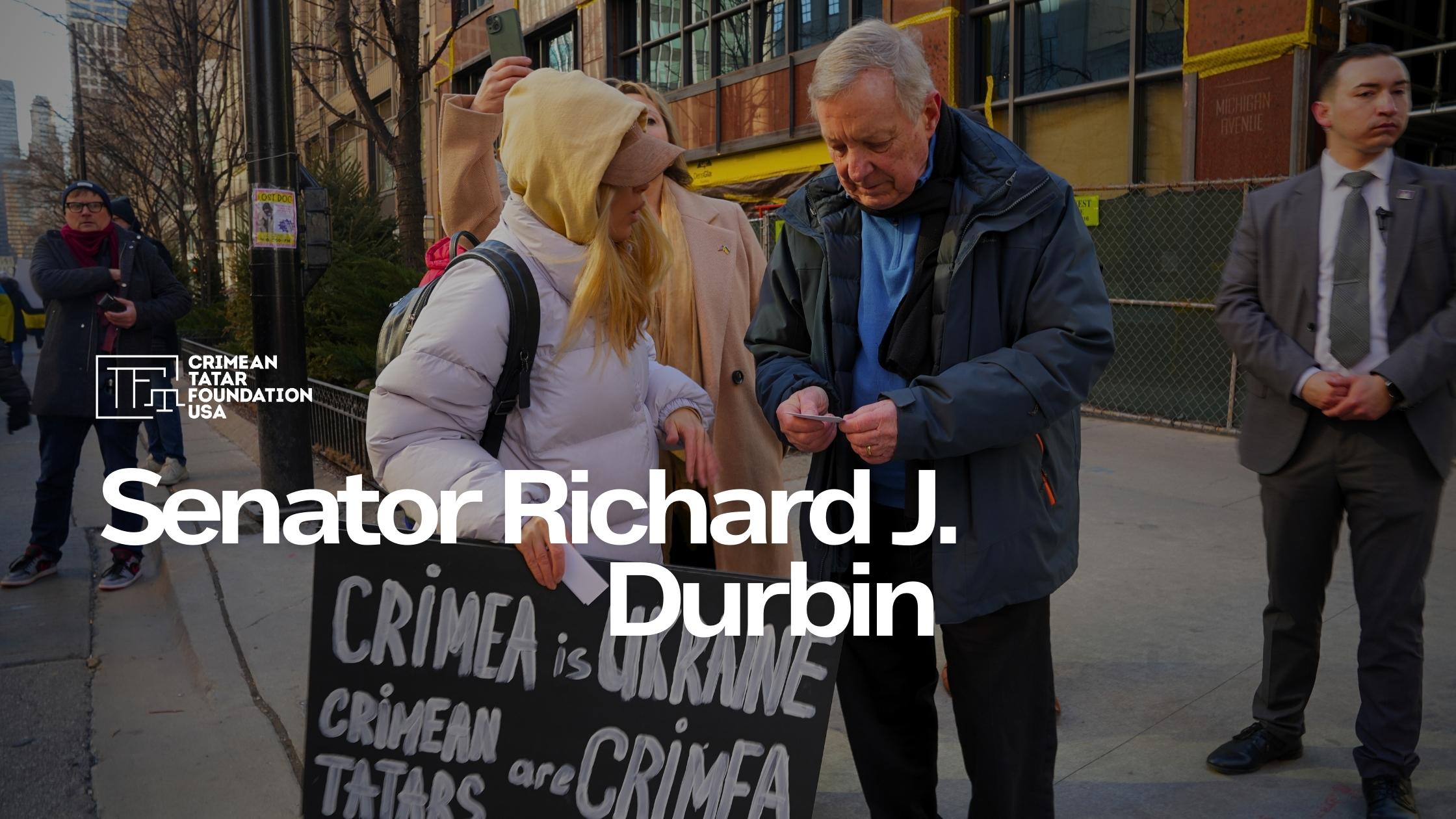
Senator Durbin Personally Meets Representatives of Crimea’s Autochthonous Nation
October 19, 2025
A 600-year connection between Lithuania and Crimea finds a new voice in the U.S. Congress
These words are not mere diplomatic courtesy. For a nation who have survived four waves of genocide under the Soviet totalitarian regime, they mark the beginning of a new chapter: Crimean Tatars — the autochthonous nation of Crimea and the indigenous people of Ukraine — are gaining direct access to one of the most influential champions of freedom for nations oppressed by Russian imperialism.
A Personal Connection to Lithuania
Senator Durbin’s advocacy for Lithuania is not merely political — it is personal. His mother, Anna (née Kutkin; Lithuanian: Ona Kutkaitė), was born in Jurbarkas, Lithuania, in 1909 and immigrated to the United States with her mother and siblings in 1911. Among his most treasured family artifacts is a small contraband Lithuanian-language Catholic prayer book, printed in Vilnius in 1863, that his grandmother carried with her to America — during a time when the Russian Empire had banned publishing, teaching, and speaking in Lithuanian for over 40 years.
“My grandmother, as defiant as she was, had this prayer book and she wasn’t going to surrender it — and she brought it with her to this country,” Senator Durbin has said. “That said something about her, but it also said something about America that she knew when she came here, her right to practice her religion would always be protected.”
This personal history explains why Durbin has been a steadfast champion of Lithuanian independence for over three decades — and why his meeting with the Co-Chairs of Crimean Tatar Foundation USA carries such profound significance.
Six Hundred Years of Shared History
The ties between Lithuania and Crimea span more than six centuries. In 1411, Grand Duke Vytautas of Lithuania supported Jalal ad-Din, son of Tokhtamysh, in his claim to the Crimean throne. This moment marked the beginning of bilateral interstate relations between Crimea and the Polish-Lithuanian world — relations built on the principle of equal partnership.
Hacı I Giray, founder of the Crimean Khanate, was born in Lithuania in 1397. The Crimean Khanate existed as an independent state from 1441 to 1783 — 342 years of sovereignty during which it maintained diplomatic, military, and trade relations with Lithuania, Poland, Prussia, and Saxony.
Crimean Tatars fought alongside the Lithuanian-Polish army, including at the Battle of Grunwald. They participated in diplomatic missions and military campaigns. Lithuania served as a political and military ally of Crimea — this was real European politics, not symbolism.
Lipka Tatars: Proof of What Is Possible
Even before the establishment of the Crimean Khanate, Crimean Tatars from the Golden Horde settled in Lithuania. These groups later became known as Lithuanian (Lipka) Tatars. They preserved Islam while maintaining loyalty to European authority, serving key functions as diplomats, translators, and intermediaries.
According to archival data, Polish-Lithuanian (Crimean ) Tatars became the first Muslims of Prussia and Saxony. The Islamic population of Lithuania was integrated into state structures, not marginalized. Lithuanian Crimean Tatars preserved Islam and their identity for over 600 years — proof that integration without assimilation is possible.
Parallel Suffering: From 1783 to the Present
The waves of genocides against Crimean Tatars began with the Russian illegal occupation of Crimean Khanate in 1783, which stripped them of their statehood and initiated a systematic pattern of destruction of their identity that continues to this day.
Both Lithuania and Crimean Tatars suffered from communist totalitarian regime from the very beginning — from 1917-1918.
Lithuania endured three waves of Soviet genocides: 1918-1920, 1940-1941, and 1944-1991, with a twenty-year period of independence in between (1920-1940). In 2019, the European Court of Human Rights, in the case Drėlingas v. Lithuania, recognized the Soviet genocide against Lithuanian partisans as a national group.
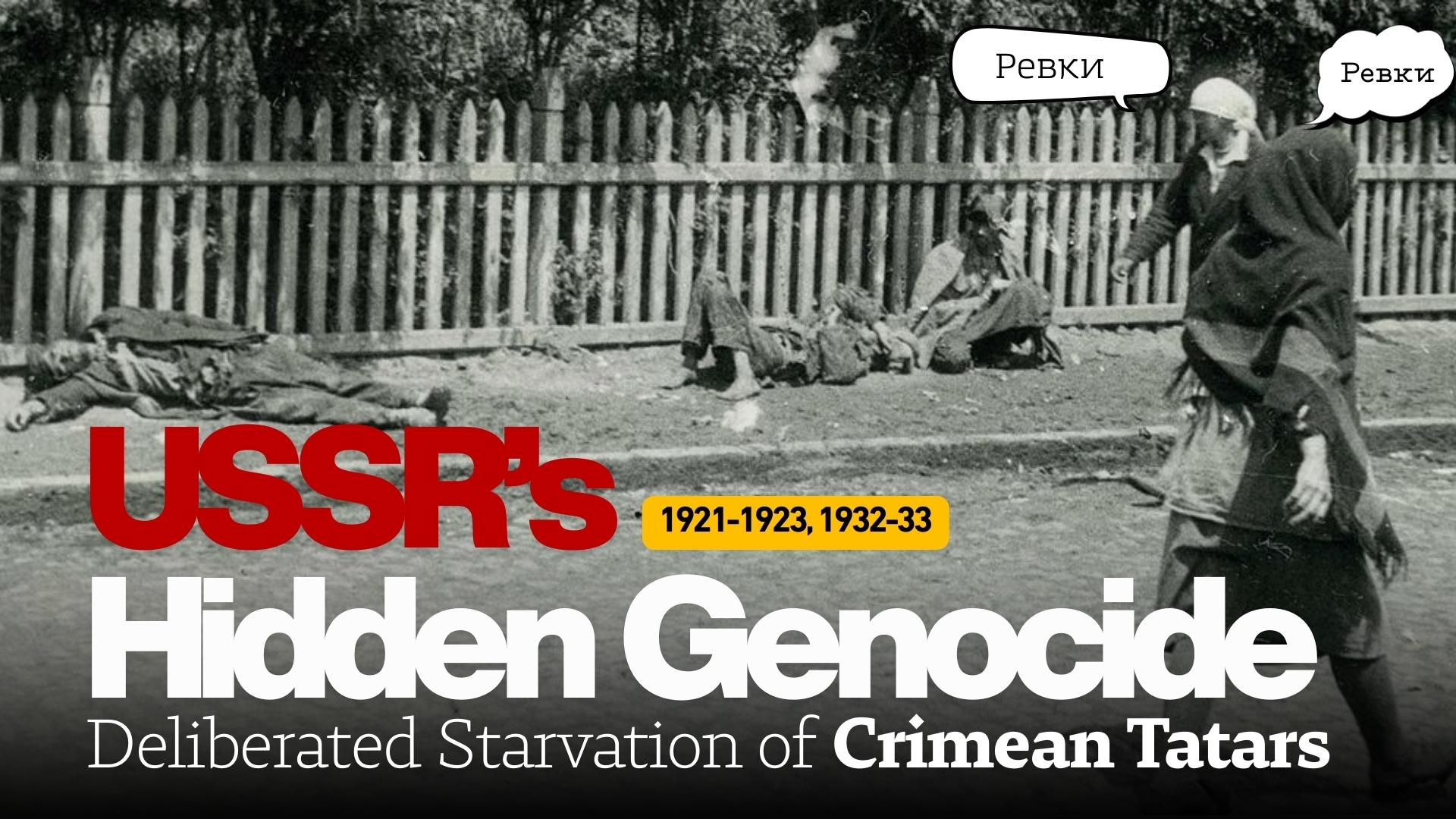
Crimean Tatars endured four waves of genocides: AçlıkQırım-genocide of 1921-1923; the Holodomor of Crimean Tatars in 1932-1933; the genocide of Crimean Tatar intelligentsia as a national group in 1937-1938; and Sürgün-genocide of 1944. New wave of genocide began after renewed occupation of Crimea by Russian Federation in 2014.
Neither nation ever recognized the occupations. The Crimean Tatar nation rejected Soviet regime from 1918 to 1991 — and equally rejects Russia’s renewed occupation since 2014.
History repeats itself as the absence of Crimean Tatar state institutions once again leaves the nation defenseless against policies of destruction. The 2014 Russian occupation reproduced the historical pattern of destroying the Crimean Tatar national group as such. In 2016, the Russian Federation liquidated the Mejlis, declaring it an alleged "extremist organization," repeating the actions of 1783 and 1918. This illegal decision deprived Crimean Tatars of their legitimate representative body and once again placed Ukraine's indigenous people in conditions of total defenselessness against state terror.Citation from the NGO "Crimean Solidarity" The International Community Must Act
According to research conducted by a collegium of Crimean Tatar statisticians working inside occupied Crimea, the actual Crimean Tatar population on the peninsula is approximately 800,000 people — nearly three times higher than Russian and Ukrainian official statistics claim.
Crimean Tatars face disproportionate repression: they comprise 60% of political arrests, 47% of deaths in custody, and 75% of forced disappearances.
Under Article I of the 1948 Convention on the Prevention and Punishment of the Crime of Genocide, contracting parties confirm that genocide is a crime under international law “which they undertake to prevent and to punish.” The International Court of Justice has ruled that the obligation to prevent genocide has extraterritorial scope — meaning all signatory states bear responsibility to act, not merely the state where genocide occurs.
The international community must fulfill its legal and moral obligation under the Genocide Convention. The ongoing genocide against Crimean Tatars in occupied Crimea demands immediate action: documentation, recognition, and concrete measures to protect Ukraine’s indigenous people from systematic destruction.
A Door That Has Been Closed for Too Long
For three decades, Senator Durbin has championed freedom for nations oppressed by Russian imperialism and Soviet Communism — from Lithuania to Ukraine. Now, the Crimean Tatar Foundation USA believes he will extend that legacy to Crimea’s autochthonous nation.
In May 2025, Senator Durbin sent an official response to the Crimean Tatar Foundation USA’s outreach. The organization documents and archives every such moment — because history is not written by those who witness it. It is written by those who preserve it.
The Crimean Tatar Foundation USA is the first and only organization in the United States established exclusively for the advocacy and cultural preservation of the Crimean Tatar people. The Foundation is building the diplomatic infrastructure that allows America’s leaders to engage directly with Ukraine’s indigenous people.
This meeting opens a door that has been closed for too long. For the first time, Crimean Tatars are speaking to America — and America is listening.
Qırım serbest olacaq. Crimea will be free