
“The Crimean Tatar Nation in Great Works of Art”: Purdue Scholars Documents Centuries of Statehood through Bilingual Monograph
Blending rigorous scholarship with visual analysis, the monograph establishes Crimean Tatars as a sovereign, autochthonous nation whose history and civilization have been preserved in art by Karel van Mander III, Carlo Bossoli, Daniel Schultz the Younger, and other great masters of European and global painting.
By Ruzhdy Hoffmaster
Martch 12, 2026
Ambassadors, Khans, and Diplomats Whose Faces Look at Us Across the Centuries
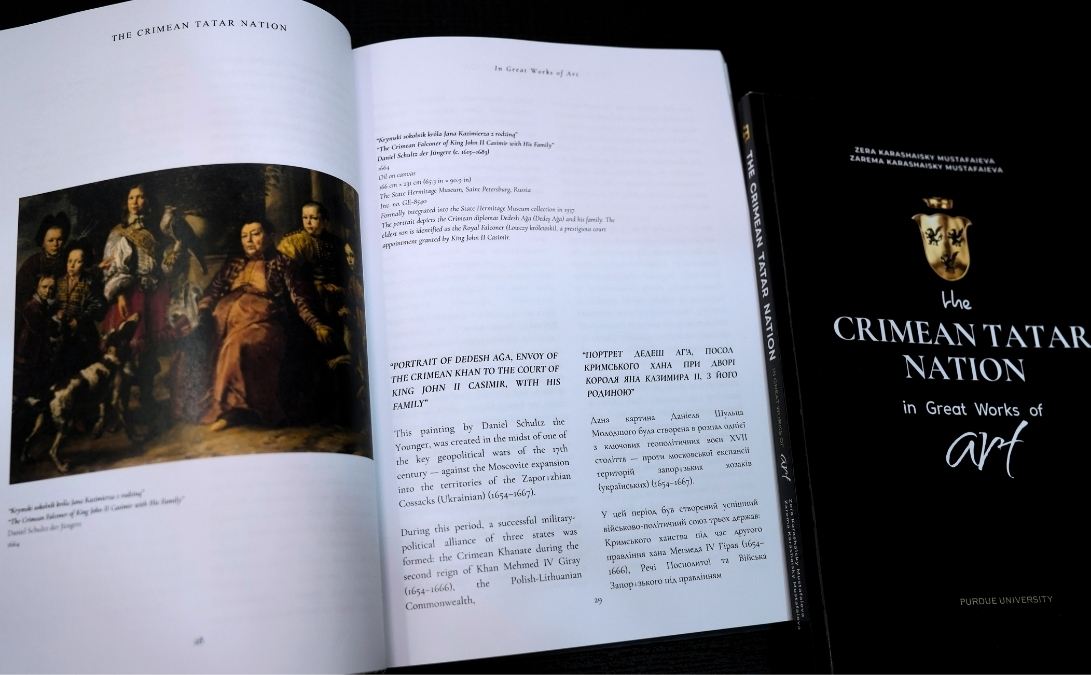
Open the table of contents — and history pulls you in like a current. The Dutch artist Karel van Mander III captured the embassy of the Crimean Khanate in Copenhagen in the 17th century. Daniel Schultz the Younger left a portrait of Dedesh Agha — Ambassador Extraordinary and Plenipotentiary of the Crimean Khanate to the court of King John II Casimir of Poland — together with his family. Carlo Bossoli, an artist who traveled extensively across the peninsula in the 19th century, created dozens of paintings: the Khan’s Palace, a mekteb school, the Navrez Bayram celebration, “The Road Between Or Qapi and Aqmescit.”
Aivazovsky — the very Hovhannes Gevork Aivazian whose canvases today hang in the world’s finest museums — painted Crimea and Crimean Tatars as an inseparable whole with the three-thousand-year history of this land: a people whose roots reach back to the Taverious, the Scythians, and the Sarmatians — a people who have been rooted in this land for three thousand uninterrupted years — a sovereign nation on its ancestral land, in the unbroken continuity of its own statehood. Dozens of other masters who came from across Europe saw Crimea the same way. The Swiss Carlo Bossoli and his compatriot Jacques-Christophe Miville. The Austrian Rudolf von Alt. The Germans Daniel Schultz the Younger and Wilhelm Kiesewetter. The Dutchman Karel van Mander III. The French school artists who left us a portrait of the Crimean Khan. What they all saw was a nation. A statehood. A civilization with roots going back millennia.
From Exhibition to Academic Record
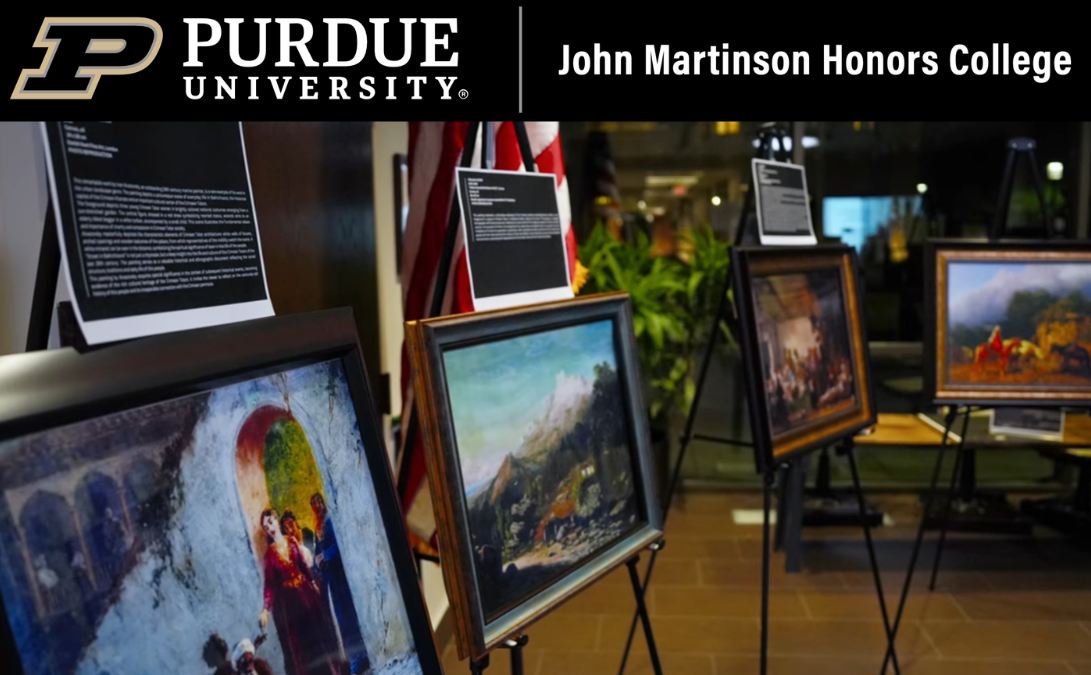
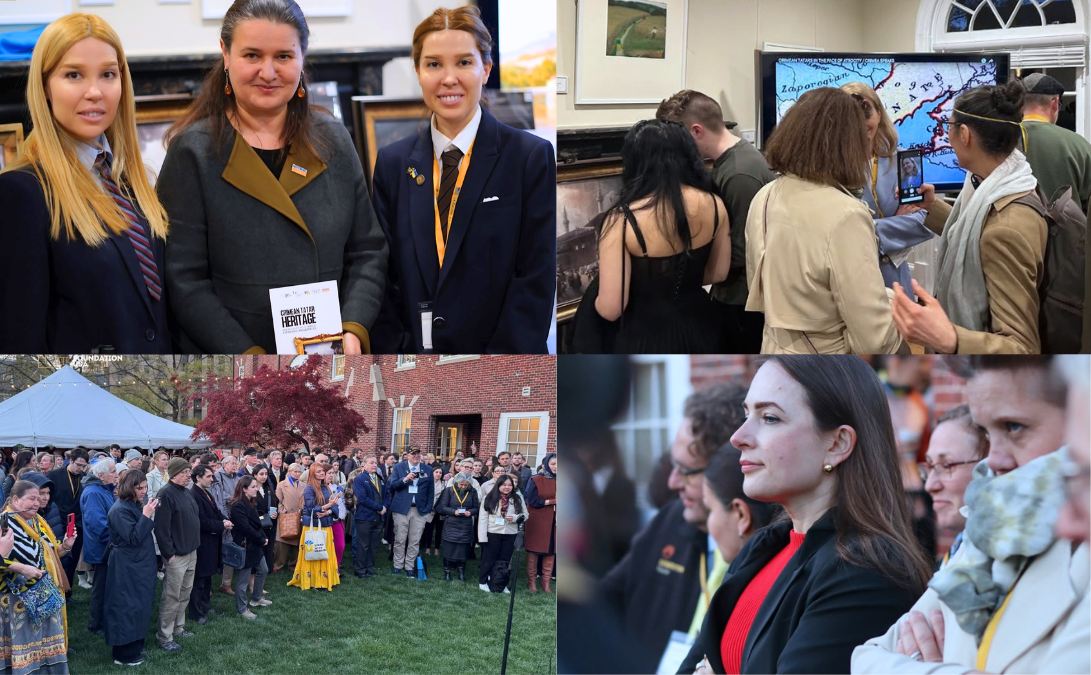
The methodological foundation of the monograph was laid at the exhibition “Crimea Heritage: The Crimean Tatar Nation in Masterpieces of Painting,” held from September 26 through October 3, 2024, at the Innovation Forum at Purdue University — organized by the John Martinson Honors College in collaboration with the Crimean Tatar Foundation USA.
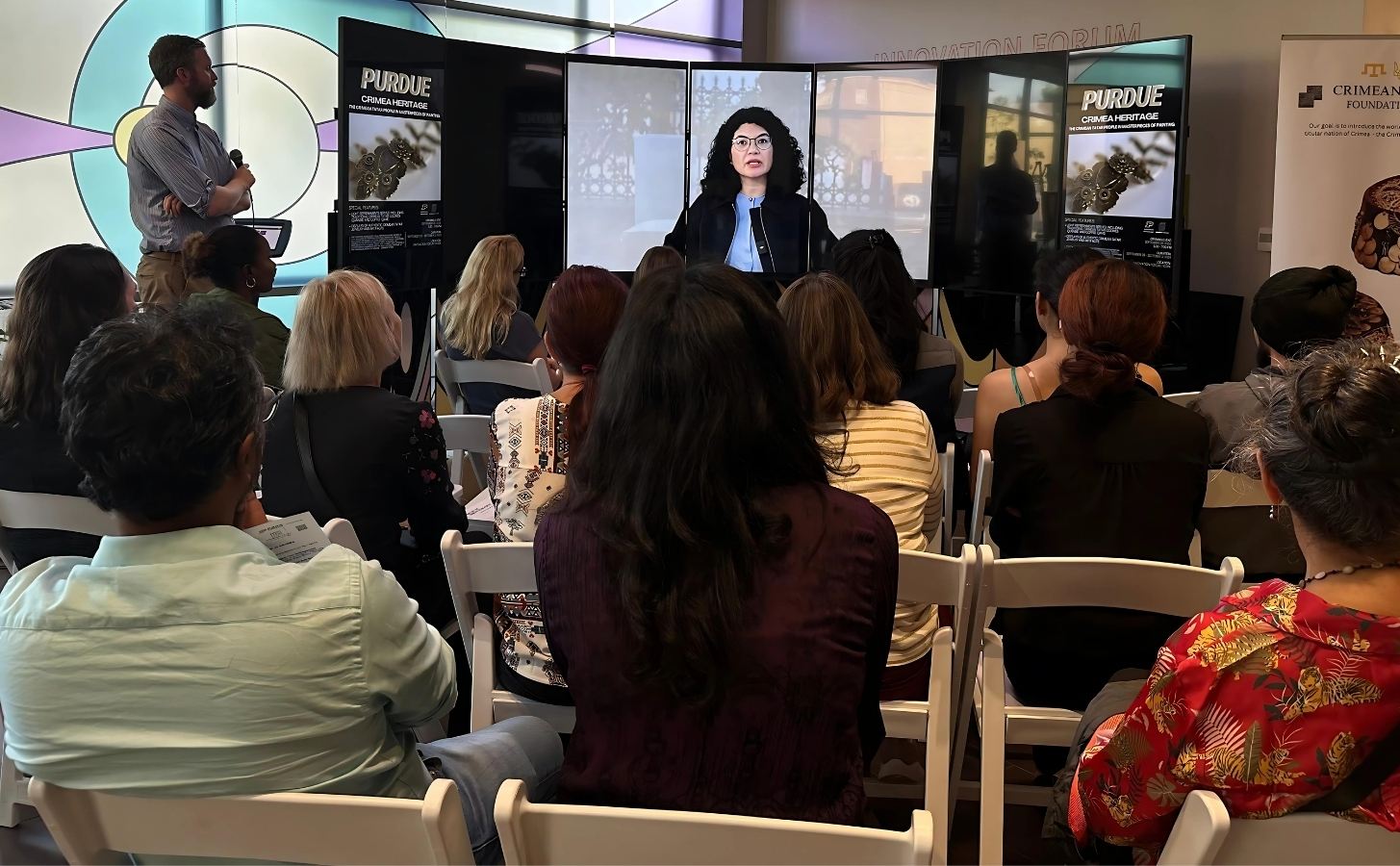
The opening ceremony was addressed online by Tamila Tasheva, Permanent Representative of the President of Ukraine in the Autonomous Republic of Crimea. Ukraine’s Ambassador Extraordinary and Plenipotentiary to the United States, Oksana Markarova, had planned to attend in person, but was required to remain in Washington due to the visit of President Volodymyr Zelensky. Six months later, on April 8, 2025, the exhibition traveled to Washington. Co-organized with the Embassy of Ukraine — the official diplomatic mission of Ukraine’s Ministry of Foreign Affairs — it opened at Ukraine House during the strategic summit of the American Coalition for Ukraine, which brought together representatives from all 50 states. Ambassador Markarova opened the exhibition in person, before an audience of diplomats, members of Congress, and senior policy makers.
The exhibition brought together reproductions of paintings from the 16th through 19th centuries alongside state coins of the Crimean Khanate, women’s jewelry worked in the technique of Crimean Tatar filigree, national artifacts from the 14th through 19th centuries — and objects that survived the Sürgün genocide of 1944.
A Glossary That Defines a Nation
The glossary — one of the most eloquent sections in the volume — defines terms without which no painting analyzed herein can be properly understood. Here one finds Baryn — a sovereign principality with its own administrative hierarchy, independent judicial jurisdiction, and a standing military force. In the 15th century, Baryn, together with other sovereign principalities, entered a strategic alliance driven by the logic of power consolidation — and that alliance gave rise to the Crimean Khanate: one of the defining state actors of the Early Modern period, which for three and a half centuries conducted diplomacy as an equal with Poland, Sweden, Denmark, and Austria. The authors draw a direct legal analogy: this is precisely what the cantons of Uri, Schwyz, and Unterwalden did in 1291 when they founded the Swiss Confederation. Here one also finds Hacıbey — a major Black Sea port founded by the first Crimean Khan, Hacı Giray, in the early 15th century. The very city that Catherine II, following its illegal occupation, substituted with the name ‘Odessa’ to obscure its Crimean Tatar roots.
“This Is a Judicial Dossier”
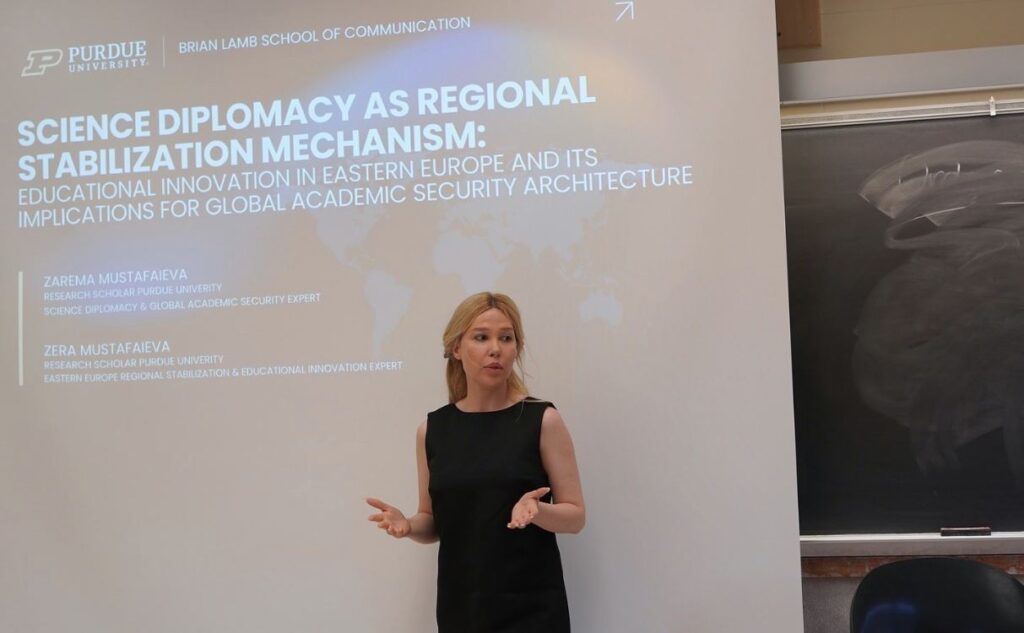
The authors of the monograph — sisters Zera and Zarema Karashaisky Mustafaieva, PhD candidates and Visiting Scholars at the Brian Lamb School of Communication at Purdue University — have structured the book as a judicial dossier. Zera specializes in cognitive warfare, media representation, and peacebuilding. Zarema focuses on strategic communications, hybrid information warfare, and autochthonous rights under international law. For three years, both have worked under the academic supervision of Dr. Stacey Connaughton, Professor and Director of the Purdue Policy Research Institute.
Each painting is examined using a verification protocol drawing on independent sources: visual data cross-referenced against written historical testimony.
“These canvases are protocols of visual inspection,” the authors write, comparing the role of historic artists to that of a forensic photographer. By documenting what existed at specific places and moments in time, these works resist censorship and rewriting.
The publisher is the Crimean Tatar Foundation USA, a 501(c)(3) nonprofit organization; all proceeds from sales are directed toward programs for the preservation of Crimean Tatar culture and the strengthening of Crimean Tatar national subjecthood — the assertion and consolidation of the nation’s standing as a sovereign subject in international and historical discourse.
The monograph is bilingual — published in English and Ukrainian. English addresses the international scholarly community; Ukrainian, the state language of Ukraine, gives the Ukrainian nation direct access to the history of the autochthonous nation of Crimea — firsthand, from Crimean Tatar scholars themselves.
The book is dedicated to the memory of the authors’ father, Zodiy Sabri Oğlu Mustafa (1960–2017). That dedication stands before everything else — before the glossary, before the mission statement, before the paintings. A single line that speaks more than any preface.

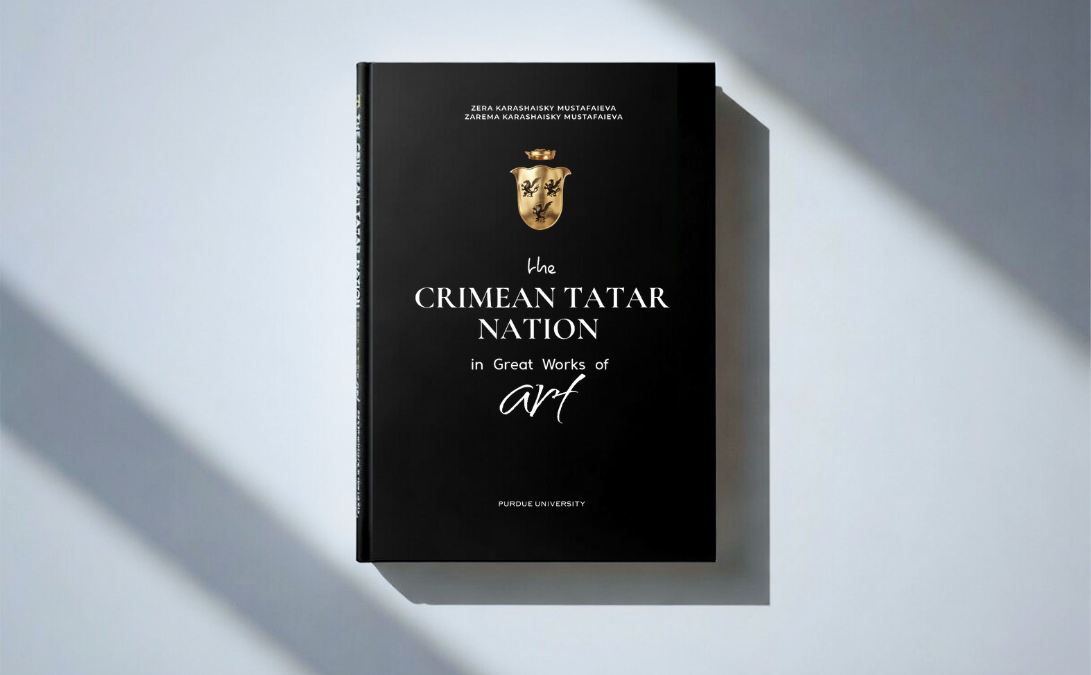
On the black cover: a golden coat of arms bearing griffins — the heraldic symbol of a Crimean Tatar statehood spanning a thousand years. Inside: more than seventy pages of imagery, analysis, and testimony. At the end: a bibliography, a list of illustrations, an index.
This is a primary source. An archive of testimony from independent witnesses — captured in paint and preserved across the centuries.
In an era when the narratives surrounding Crimea are being rewritten in real time, The Crimean Tatar Nation in Great Works of Art accomplishes what no press release and no tweet can: it opens our eyes to what has always been there — on the canvases of the world’s museums.
The only question is whether we chose to see it.
“The Crimean Tatar Nation in Great Works of Art.” Zera Karashaisky Mustafaieva, Zarema Karashaisky Mustafaieva. Crimean Tatar Foundation USA. 2026. ISBN: 979-8-9946783-1-2. Contact: info@crimeantatarfoundation.org