Crimean Tatars Honor the Victims and Survivors of the Sürgün-genocide of 1944 in New York
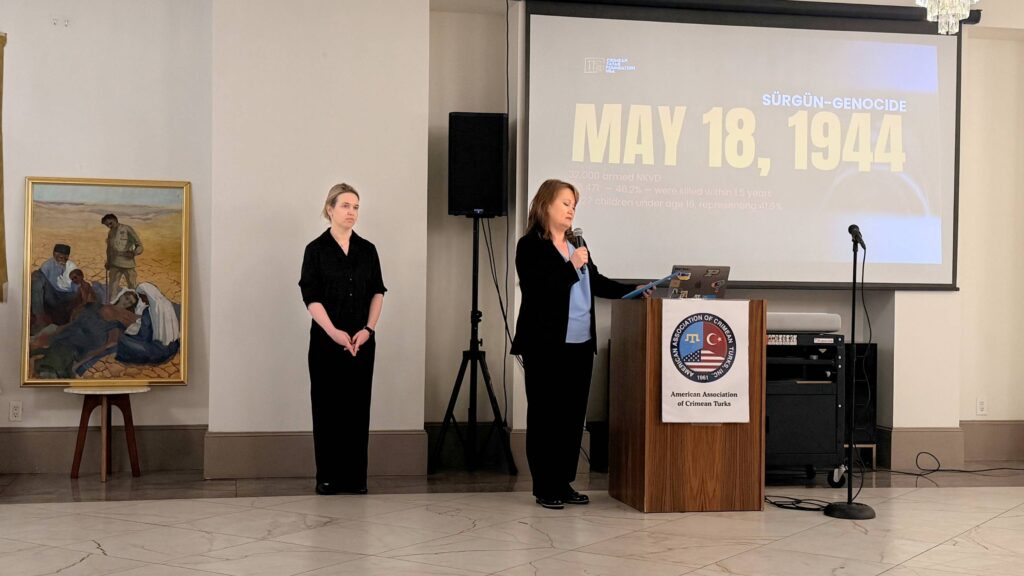
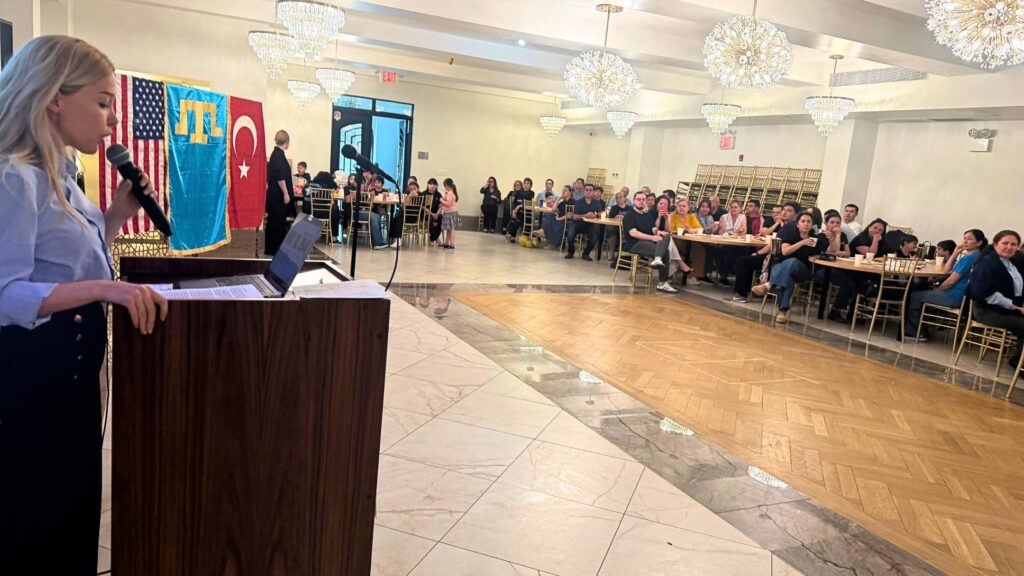
BROOKLYN, NEW YORK — May 17, 2026. Several blocks from the headquarters of the United Nations, in the three-story cultural building of the American Association of Crimean Turks at 4509 New Utrecht Ave, Brooklyn, one of the largest Crimean Tatar diasporas in New York gathered to honor the 82nd anniversary of the Sürgün-genocide.
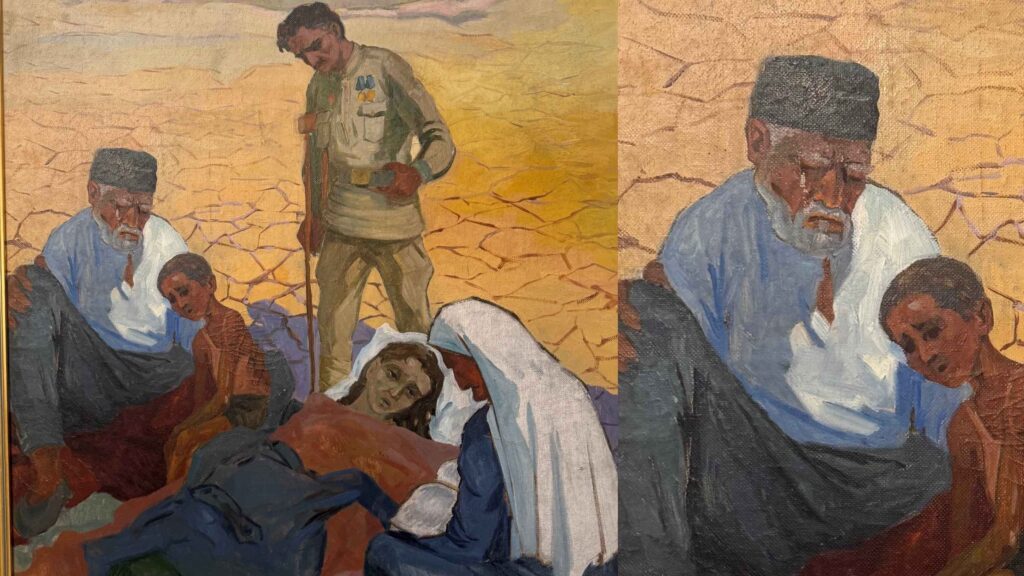
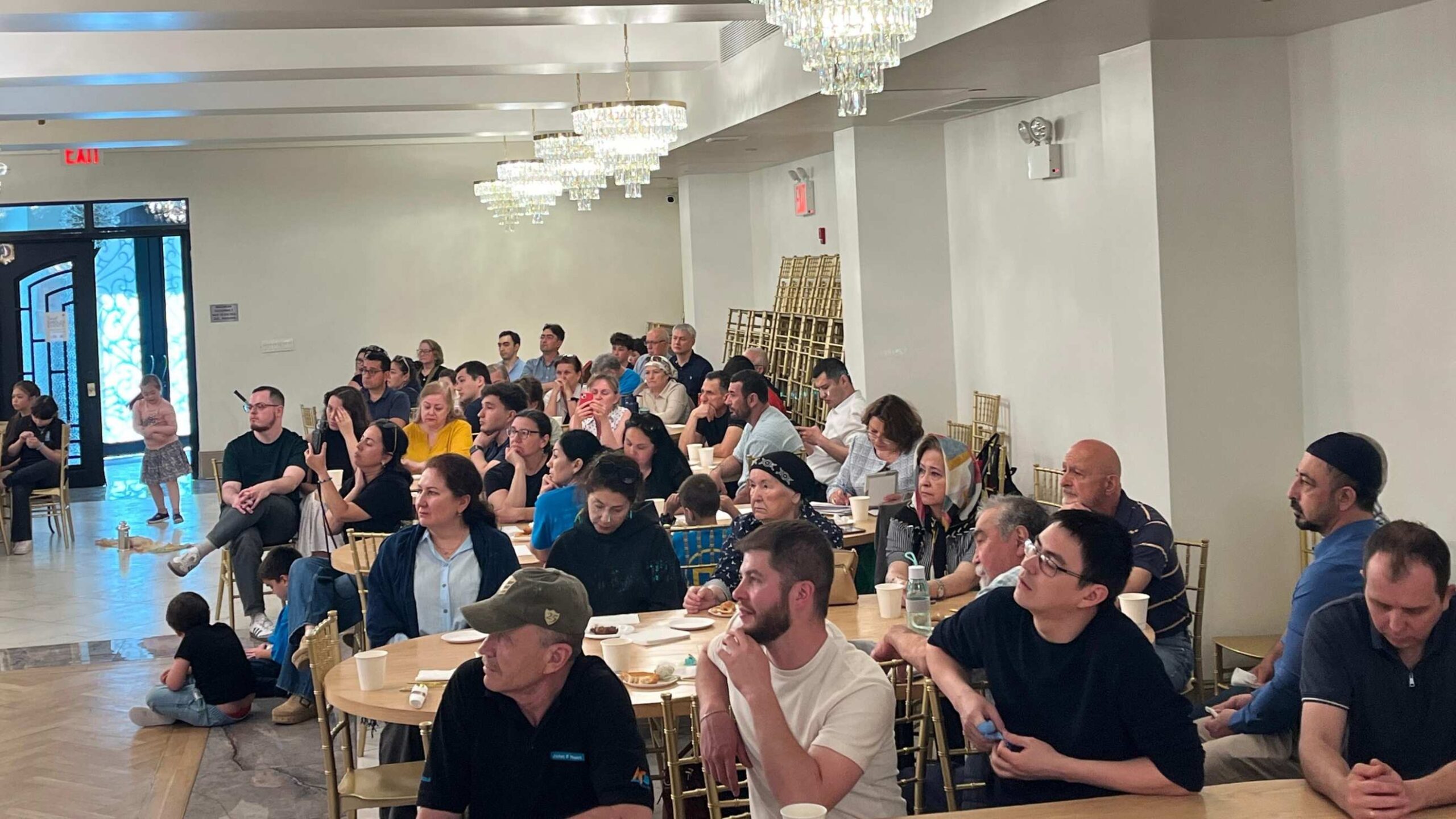
Members of the diaspora, Crimean Tatar youth, researchers and activists gathered to pay tribute. The commemoration went beyond a memorial act – it also carried an intellectual dimension. This day became not merely an act of remembrance — it became a platform for understanding the contemporary challenges facing Crimean Tatar subjecthood and Ukraine.
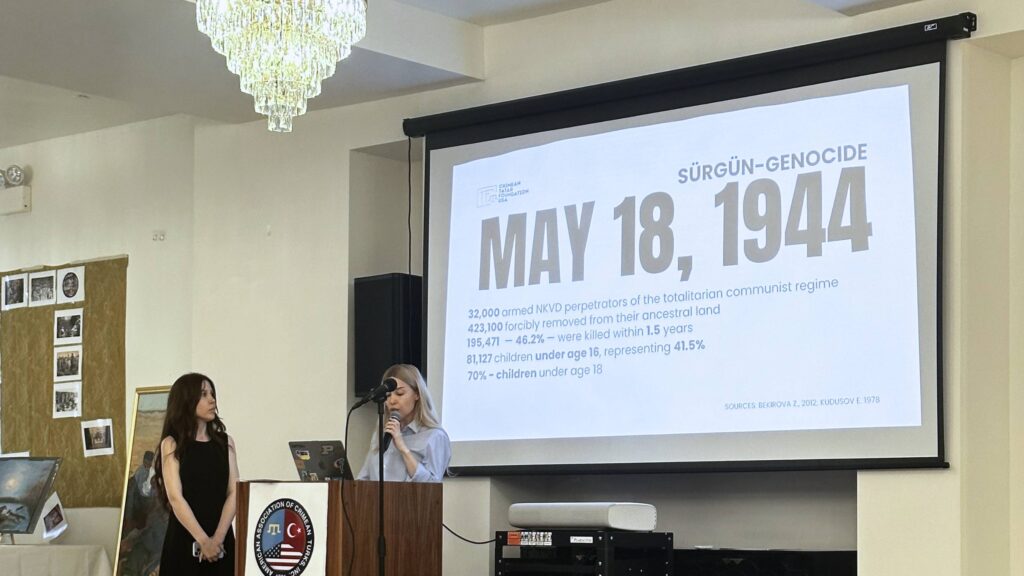
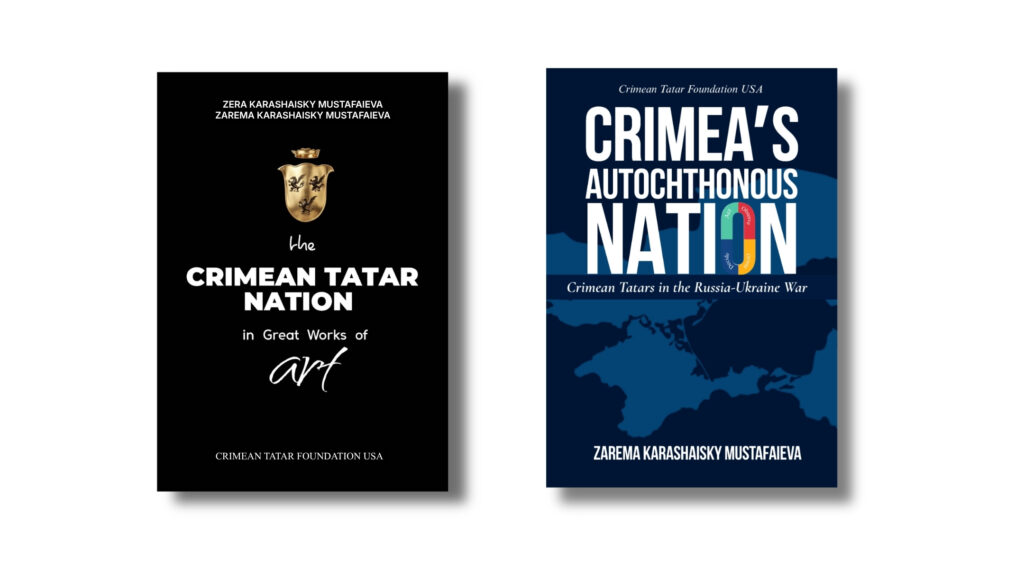
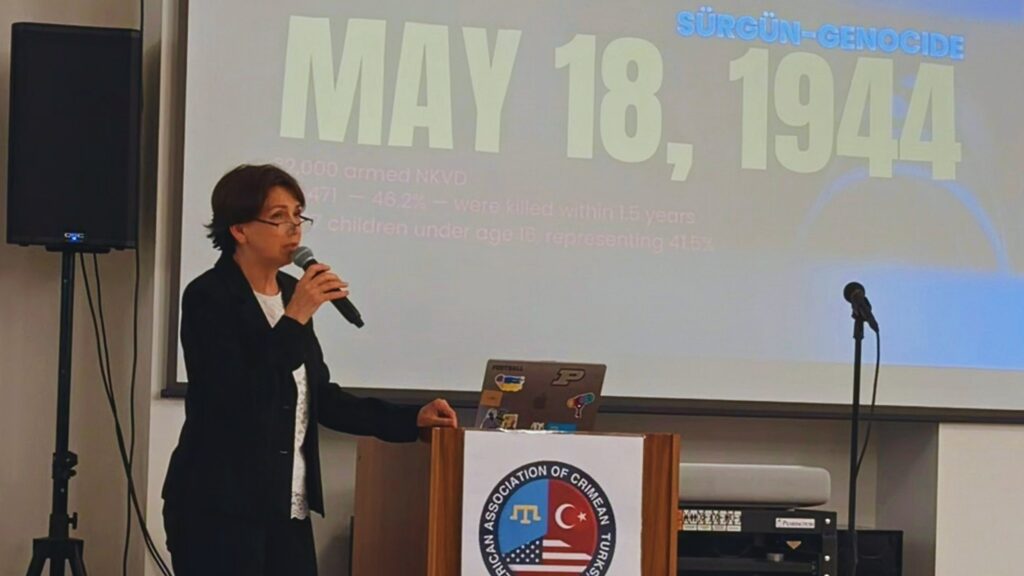
Scholars and authors of monographs Zera and Zarema Karashaisky Mustafaeva presented two monographs published in 2026. Their presentation was devoted to cognitive warfare.
PART I: COMMEMORATION
The event opened with the Crimean Tatar national anthem. The first to speak were the President of the American Association of Crimean Turks, Esma Resutova, and the Director of the Ismail Gasprinsky School, Elzara Chelebi.
The Imam of the mosque at American Association of Crimean Tatars read the memorial prayer. Under the guidance of Crimean Tatar language teacher of AACT Leyla Ametova, the children recited poems by Crimean Tatar poets; the children laid candles in the shape of the tamga — the national symbol of Crimean Tatars.
PART II: SCIENCE AS A WEAPON OF JUSTICE
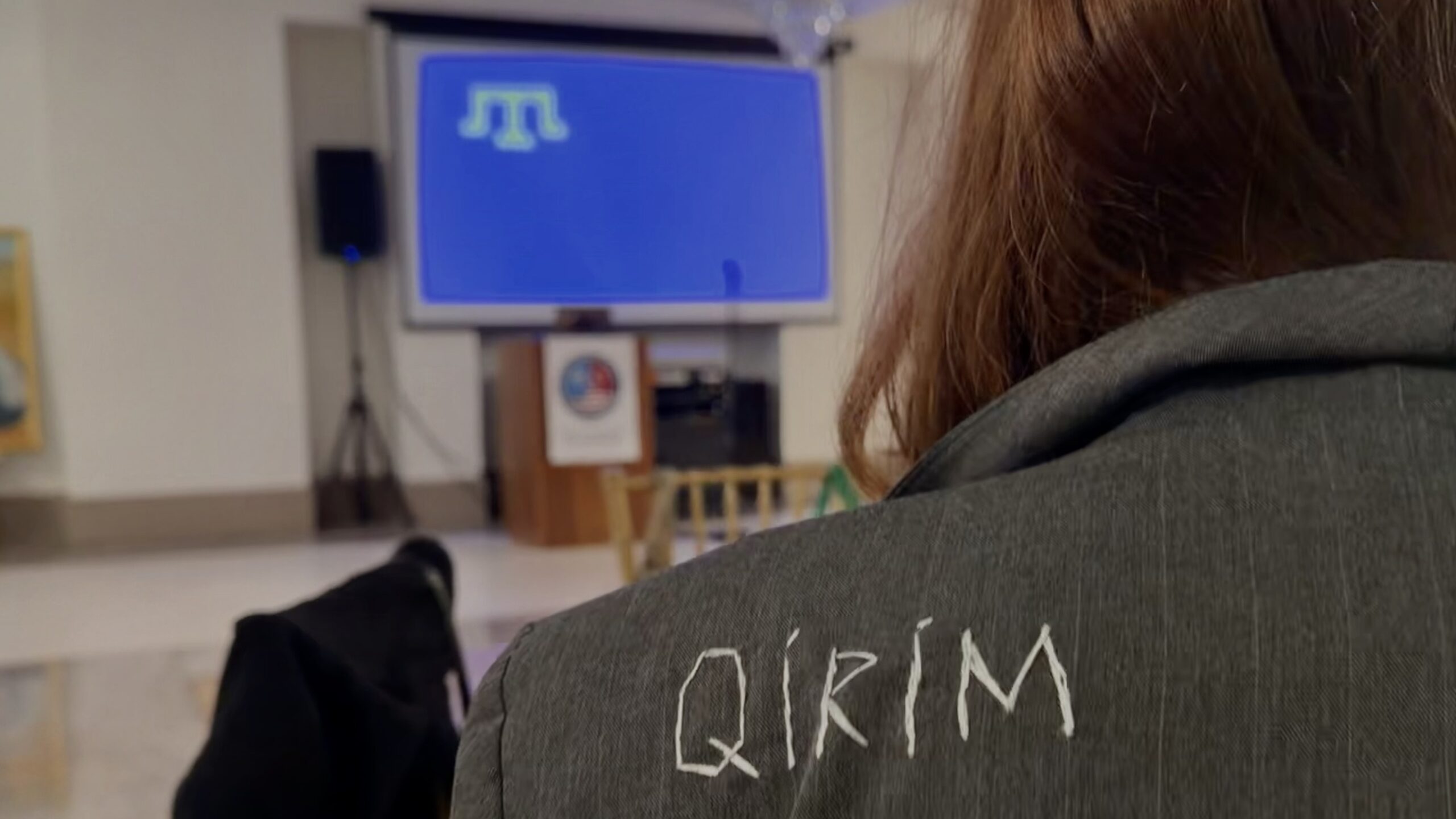
The second part of the evening honored the presentation of scholarly academic monographs published in 2026 — the culmination of three years of rigorous research conducted under the guidance of Purdue University professors. Their authors, Zera and Zarema Karashaysky Mustafaeva, are Visiting Scholars at Purdue University’s Brian Lamb School of Communication. Zera Mustafaeva is President and Co-Founder of the Crimean Tatar Foundation USA and Co-Founder of the Crimean Tatar Academy of Arts and Sciences. Zarema Karashaysky Mustafaeva serves as Vice President, Chair of International Relations, and Co-Founder of the Crimean Tatar Academy of Arts and Sciences.
The first monograph — «The Crimean Tatar Nation in Great Works of Art» — documents the three-thousand-year continuous rootedness of Crimean Tatars in Crimea, their 342-year sovereign statehood, through paintings by great European masters of the 16th–19th centuries.
The second — «The Autochthonous Nation of Crimea: Crimean Tatars in the Russian-Ukrainian War» — at the evening was devoted to one of the key sections of the monograph: cognitive warfare. To how the language with which we formulate the genocide and events concerning Crimean Tatars determines whether justice will ever be restored.
«Our task is to create a body of knowledge that will be used in both scholarly and diplomatic circles
Zera K. Mustafaeva
«Our task is to create a body of knowledge that will be used in both scholarly and diplomatic circles,» said Zera Mustafaeva. «We seek to institutionalize Crimean Tatar knowledge. This means creating research, educational programs and cultural initiatives that form a long-term presence in the global academic and media space.»
After the ceremony and the presentation of the monographs, an active discussion followed — the hall asked thoughtful questions. Among them:
— Why now, in 2026?
Zera: Because right now the fate of the post-war world architecture is being decided. Negotiations about Crimea will inevitably take place. And if in those negotiations Ukraine cannot reclaim Crimea without recognizing Crimean Tatars as sovereign subjects — not as an “indigenous people,” not as a “question,” not as a “issue,” but as a sovereign subject within Ukraine. If Crimean Tatars appear as objects in the negotiations, Ukraine — aware of the legal weakness of its position — will find itself unable to recover either Crimea or its citizens, thereby condemning itself to future waves of Russian aggression and occupation of Ukrainian territory. By failing to recognize the sovereign subjecthood of Crimean Tatars as the legal instrument of de-occupation, Ukraine effectively and voluntarily surrenders one million of its own citizens to Russian sovereignty — while simultaneously forfeiting the only legally sound foundation for the return of Crimea.
Zarema: The second monograph is about what is happening today. The cognitive war against Crimean Tatar subjecthood did not begin in 2014. It began in 1783 — with the first occupation. From the moment when the Russian Empire first attempted to rewrite who is the sovereign of this land. We researched this for three years at Purdue University. The mechanism has not changed: narrative inversion, linguistic recoding, strategic synchronization. Only the instruments have changed. Today it is social media, academic journals and international organizations.
— What is the significance of your work for Ukraine? Why should Ukrainian society read your monographs?
Zera: Because without understanding Crimean Tatar subjecthood it is impossible to build a strategy for the return of Crimea that will possess international legal force. Ukraine’s right to Crimea is derivative and secondary relative to the primary right of the autochthonous nation — Crimean Tatars. This does not diminish Ukrainian rights. It strengthens them — because together they form a legal foundation that is far stronger than either of them separately. Those who are developing Ukraine’s deoccupation strategy must understand: the strongest argument in international law is not «we want to return our land», but «this land has never legally departed from the sphere of sovereign autochthonous subjecthood».
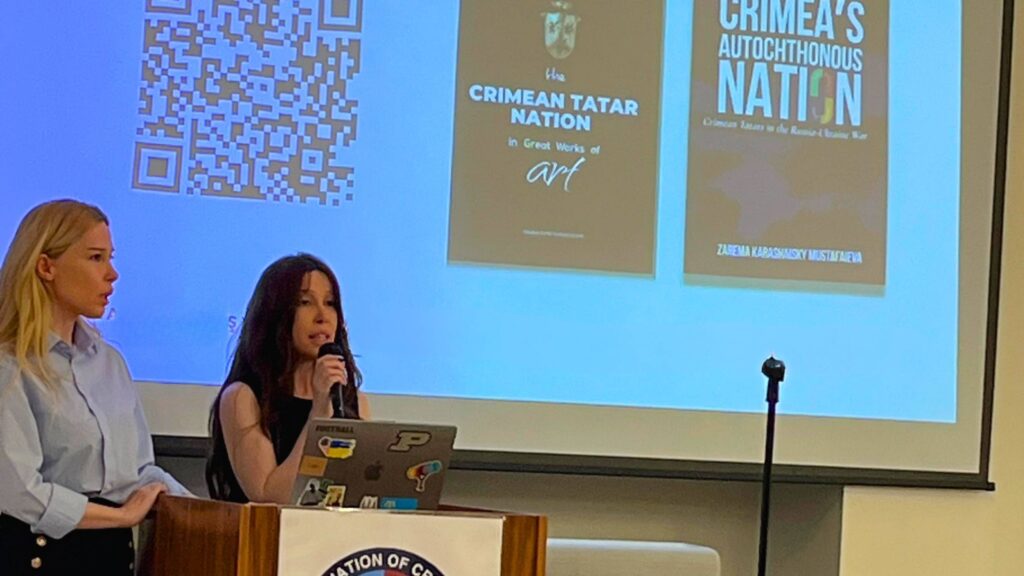
“We seek to institutionalize Crimean Tatar knowledge. This means creating research, educational programs and cultural initiatives that form a long-term presence in the global academic and media space.”
Zera K. Mustafaieva
— What role does the recently founded the Crimean Tatar Academy of Arts and Science play in this process?
Zera: The Academy, founded in 2026, is an institutional response to the challenge we document in our research. The autochthonous nation needs its own academic institutions — not because other universities are inadequate, but because questions of Crimean Tatar subjecthood require a research framework that centers the Crimean Tatar nation as a subject, not an object of study. The Academy is to become the place where young Crimean Tatar scholars receive the instruments for defending their people — legal, academic, communicative. This is a matter of justice. We want Crimean Tatar history to be not only preserved, but integrated into global narratives.
The monographs of Zera and Zarema Karashaysky Mustafaeva are available on Amazon. Subscribe to the YouTube channel «Crimea Speaks», Instagram and LinkedIn of the Crimean Tatar Foundation USA. Follow the work of the Crimean Tatar Academy of Arts and Science.
Because a nation that knows its words — is unconquerable.
“Our mission is to strengthen the agency. This applies both to a people and to a state. We aim for Crimean Tatars and Ukraine as a whole to be active participants in global dialogue, not just subjects of discussion.”
Zera K. Mustafaieva